
By Jacob Wilson
Every few weeks, I hear someone say, “Billings isn’t what it could be—yet it’s still home.” That balance—a mix of pride, frustration, hope—feels deeply personal. It’s about miles of prairie and the Rims; dusty summer wind and quiet mornings. It’s the feel of community masked by social distance.
The Pride I See Every Day
Despite criticism, folks here in Billings talk about what works: trails that connect neighborhoods, a medical corridor serving dozens of rural communities, and restaurants and local music that match the best of small-city America. New residents often tell me how surprised they are to find so much—yet so much still quietly overlooked.
The Gaps Between Us
And then there are the parts we don’t always like talking about. Safety concerns show up in surveys and in neighborhood meetings—especially after dark, especially in areas without good lighting. People wonder whether progress is only for those in certain ZIP codes, and whether some voices get heard more than others.
Housing and Affordability
One of the clearest divides is housing: where it’s being built, who can live there, and how fast costs are rising. When a development with 102 new units is held up by lengthy debates or red tape, it reminds many of us that affordability depends on how we plan—and who we trust during that planning. If growth is handled poorly, it can widen inequalities instead of narrowing them.
Belonging and Identity
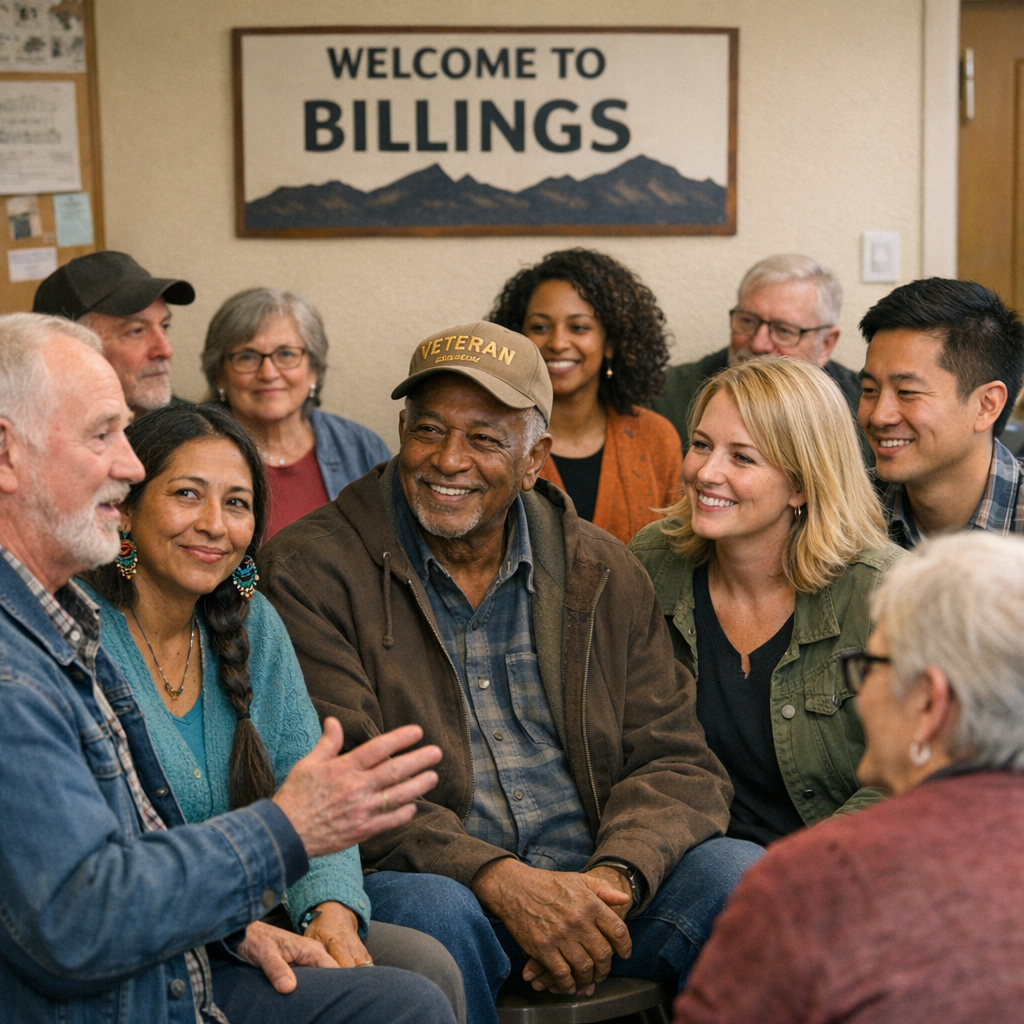
Billings is becoming more diverse—cultural, racial, economic. That’s a strength. But it’s also shaken up assumptions. Some people feel welcomed; others feel their stories aren’t yet fully visible: in civic leadership, in public spaces, in community narratives. If we aim to belong, we have to make room—really make room—for every voice.
Small Acts, Big Difference
Belonging doesn’t always come from big policy. Sometimes it’s a neighbor bringing in lumber to help with repairs, or a local group organizing a song or service, or task forces in the Heights and the West End meeting in church basements to listen and plan. These homespun efforts knit trust where groans of “they don’t listen” often dominate.
What We Can Work Toward
- Prioritizing safety through better street lighting and responsive community policing—not just for perception, but for real sense of security.
- Zoning and development plans that center human needs: affordability, walkability, culture. When every new project invites neighborhoods into the conversation early, outcomes feel shared.
- Amplifying voices historically left out: youth, Native, multiracial, recently arrived, low-income. Representation in government, boards, arts—and in our everyday conversations.
- Local leaders who don’t just fix what’s broken, but help draw a picture of what we want together: a more livable, inclusive, honest Billings.
I believe Billings already has the raw materials for belonging: resilient people, beautiful landscapes, a spirit of self-reliance. What we’re building next depends on how we use that foundation. When enough of us show up—listening, caring, doing—the city becomes more than where we pay taxes. It becomes home.